



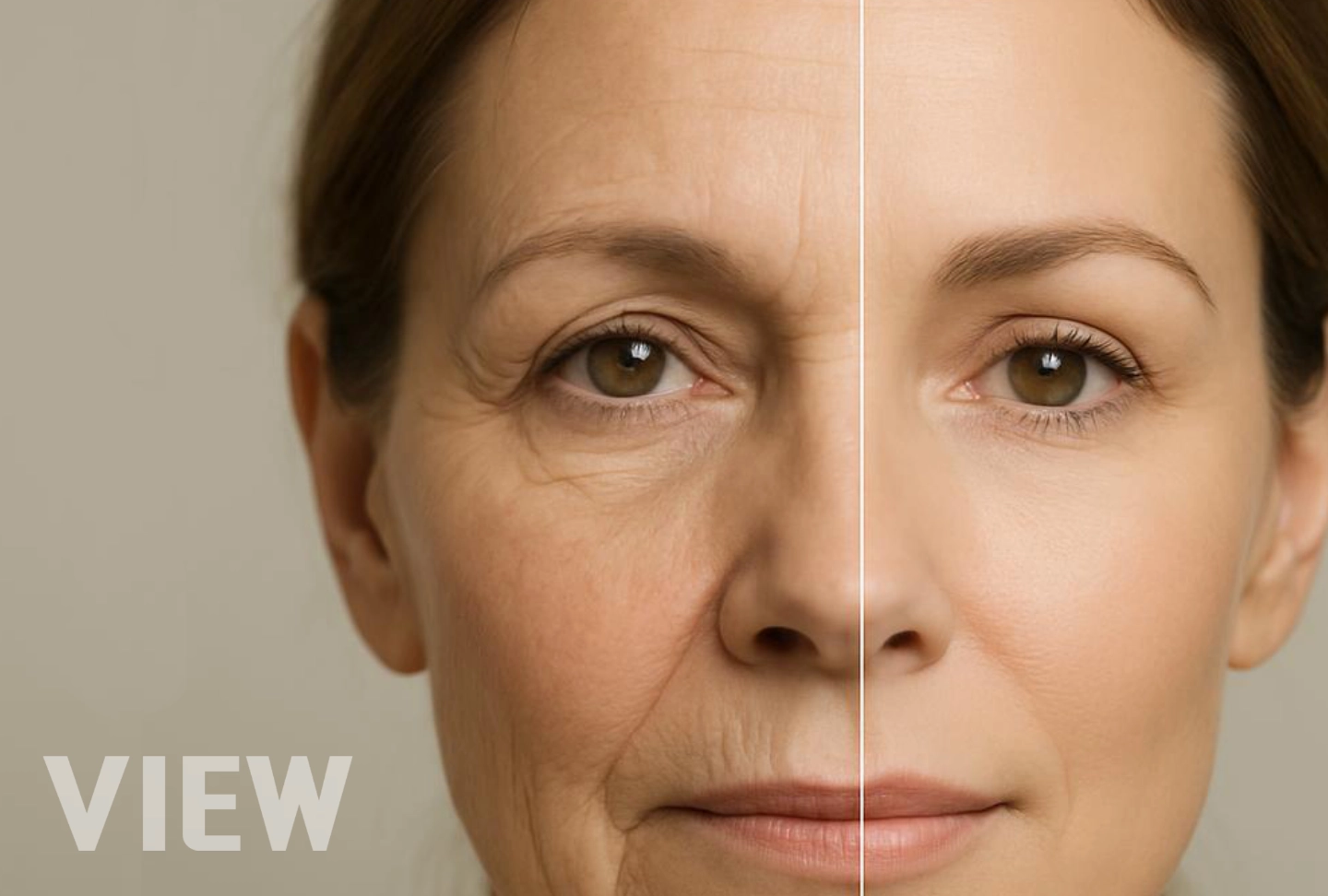
Understanding Facelift Surgery in Korea for International Patients
Korea is widely recognized as a global destination for aesthetic surgery, and many international patients visit each year for advanced anti-aging procedures. Among these options, facelift surgery is considered one of the most effective ways to address facial sagging and structural aging. During research or consultation, two terms appear most often: Deep Plane and SMAS facelift.The key question is not “Which procedure costs more?” but “Which technique best matches my facial anatomy and aging pattern?” Understanding this difference is the first step toward natural, long-lasting results.
Choosing the Right Facelift Technique
There is no single facelift method that works for everyone. The face is made up of multiple layers—skin, fat, muscles, and retaining ligaments—and each layer ages differently in both direction and degree. Earlier facelift methods focused mainly on tightening loose skin. While this could offer short-term improvement, it sometimes created visible tension around the ears or mouth. Modern facelift surgery in Korea prioritizes repositioning deeper structural layers rather than pulling the skin alone, which helps maintain natural facial expressions while improving overall contour.
Major Facelift Techniques Used in Korea
To understand facelift surgery, it helps to first understand the SMAS (Superficial Musculoaponeurotic System)—a thin but strong fibrous layer beneath the skin and subcutaneous fat that supports the facial muscles.
- Skin-Only Lift: Tightening only the skin layer (now rarely recommended due to limited durability)
- SMAS Lift: Repositioning and securing the SMAS layer to restore structural support
- Deep Plane Lift: Working beneath the SMAS to release retaining ligaments and lift the face as a single structural unit
What Is a Deep Plane Facelift?

The Deep Plane Facelift is a technically advanced procedure that operates beneath the SMAS, within a deeper anatomical space. A key step is releasing the retaining ligaments—structures that anchor facial tissues to the underlying bone. Once released, sagging tissues can be repositioned upward with less tension on the skin, helping results look more natural and last longer.
Key Characteristics of the Deep Plane Technique
- Retaining ligament release: Allows for a wider and more effective lifting range
- Midface improvement: Particularly effective for sagging cheeks and deep nasolabial folds
- Natural results: Minimal tension on the skin helps preserve natural facial expressions
Commonly Recommended For
- Pronounced nasolabial folds and midface sagging
- More advanced facial aging (often in patients in their 50s or 60s)
- Patients seeking long-term structural rejuvenation in a single procedure
What Is an SMAS Facelift? (Dual Plane Approach)
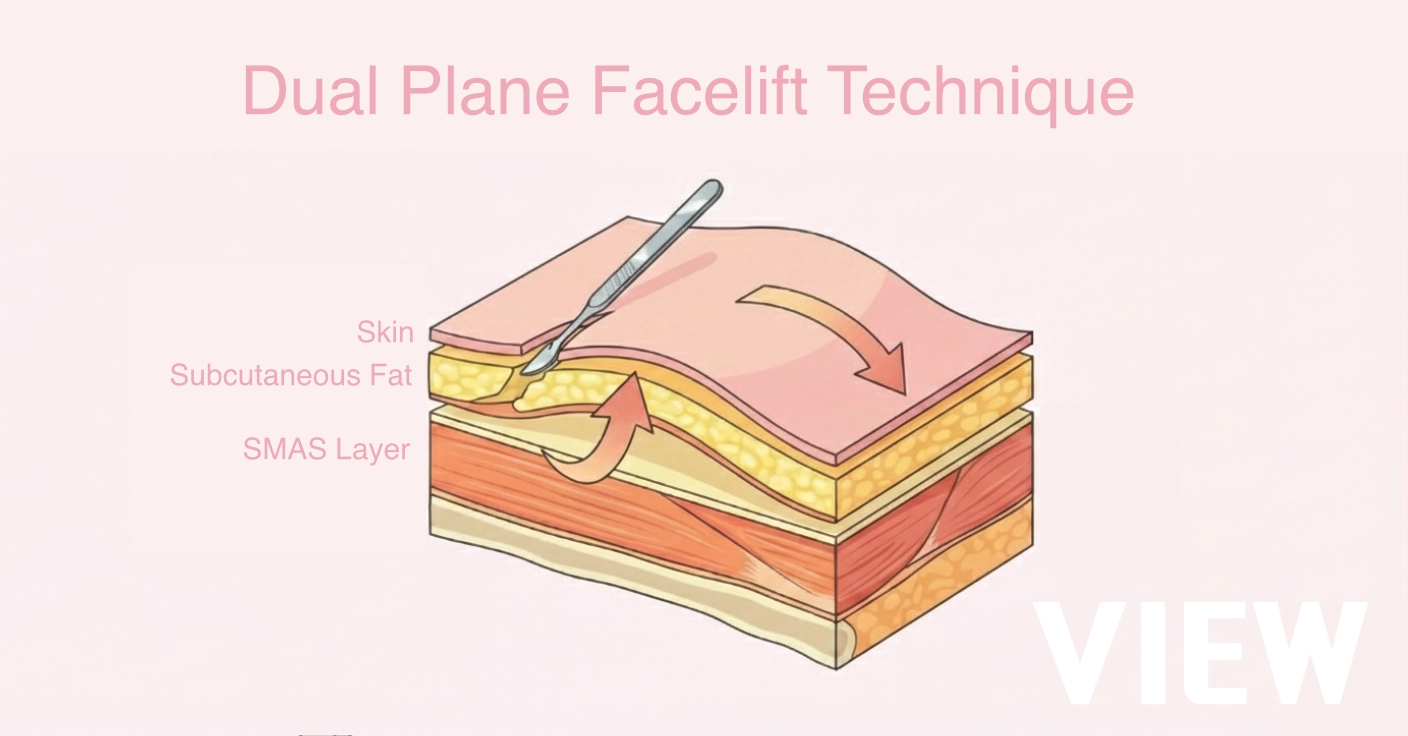
In Korea, many experienced surgeons perform an advanced form of SMAS lifting known as the Dual Plane Facelift. This method treats the deeper layer for support while allowing the skin to be re-draped gently for a smoother, more natural finish.
Core Concept of the Dual Plane Technique
- Skin layer
- SMAS layer
The SMAS is repositioned firmly to restore facial support, while the skin is laid back down without excessive tension and only the excess is removed. This can be especially helpful for refining the jawline while minimizing the risk of an overly “pulled” appearance.
Commonly Recommended For
- Moderate facial sagging (often in patients in their 40s to early 50s)
- Primary concern is jawline blurring or jowls rather than deep smile lines
- Revision cases where deep plane dissection may be unsafe due to adhesions
- Thinner skin where careful tension control is important
Deep Plane vs Dual Plane Facelift: A Structural Comparison
Both techniques can deliver excellent lifting, but they differ in target areas and recovery characteristics. Consider your main area of concern and your recovery timeline when comparing options.
Why a Single Technique Is Rarely Used for the Entire Face
Facial aging is not uniform.
Even within the same person, the midface, jawline, and neck can age in different ways.
For this reason, facelift surgery is often planned using a combined approach, such as:
- Deep plane lifting for the midface
- SMAS or dual plane lifting for the jawline and neck
- Volume restoration (such as fat grafting) where needed
Rather than relying on a single technique, modern facelift planning focuses on choosing the most appropriate anatomical layer for each area of concern. Built on a surgical system that supports all major facelift techniques—including Deep Plane and SMAS (Dual Plane) lifting—View Plastic Surgery designs customized facelift plans based on each patient’s facial structure and unique aging pattern.
Synergy Procedures Commonly Combined With Facelift Surgery
A facelift repositions sagging tissues, but optimal rejuvenation often includes improving volume and skin quality as well. In Korea, surgeons commonly recommend complementary procedures based on individual needs.
“My facial contours look sharp, but my neck still appears bulky.”
Why is it needed?
When only a facelift is performed, an imbalance can occur where the face looks rejuvenated while the neck still appears aged. This procedure is particularly important for patients with excess fat under the chin or loosened platysma muscles that create the appearance of a so-called “turkey neck.”
What does it do? : The separated neck muscles on both sides are brought together and firmly tightened at the center, much like a corset. This creates a clean, elegant transition from the jaw to the neck, forming a refined 90-degree “L-shaped neckline.”
What does it do?
The separated neck muscles on both sides are brought together and firmly tightened at the center, much like a corset. This creates a clean, elegant transition from the jaw to the neck, forming a refined 90-degree “L-shaped neckline.”
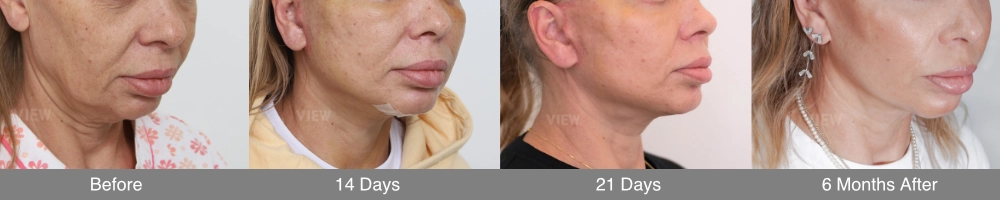
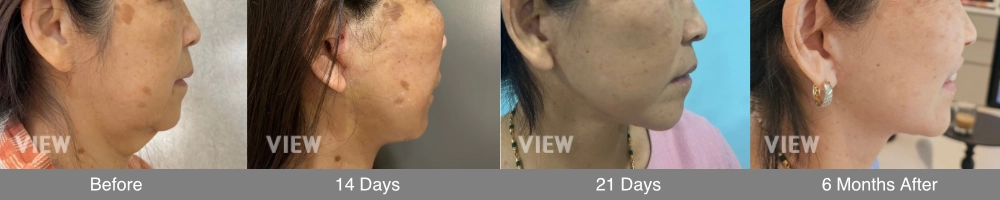
“Tight but flat vs. contoured and full of vitality.”
Why is it needed?
What does it do?
Purified fat harvested from the thigh or abdomen is transferred to hollow areas of the face. When lifting is combined with volume restoration, the result is a much more youthful, vibrant, and naturally fuller ‘baby-face’ appearance.
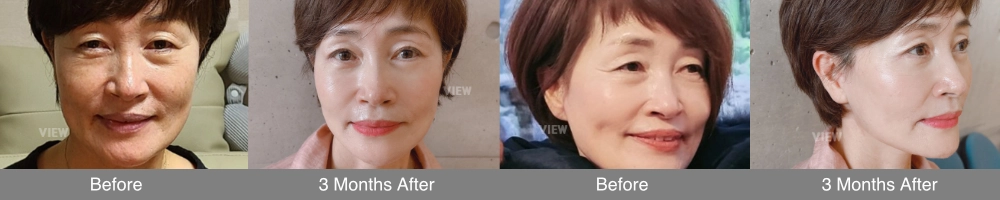
“Now it’s time to add the shine.”
Why is it needed?
What does it do?
FAQ
Will facelift scars be visible?
How long should I stay in Korea after surgery?
Is nerve damage a concern with the Deep Plane technique?
The deep plane approach requires advanced anatomical knowledge. When performed by an experienced, board-certified plastic surgeon, the risk of nerve injury is very low.